
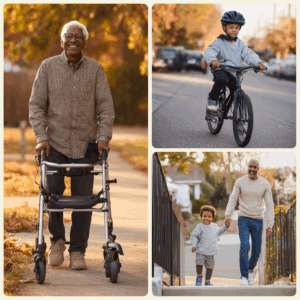
November is Fall Prevention Month and if you think falls are a concern for older adults only, think again. In fact, falls and motor vehicle accidents are the leading cause of injury related hospitalizations and emergency department visits among all age groups in Canada.
Anyone around children would not be surprised to learn that falls among this group are very common. By age 25, falls risk dips but then it increases again around age 65 years. However, there are steps you can take to reduce your future risk of falls.
Read on to learn why our falls risk increases as we get older, and what you can do to prevent falls and related injury.
Why fall prevention matters
Falls can happen to anyone. Accidental falls and related injury are high among children and decrease as they mature into teenagers and younger adults, only to increase again as we progress through adulthood and transition into older adults. With natural aging, physical and cognitive changes increase our risk of falls.
Staying physically active is one of the best ways to maintain essential strength and balance, and help reduce falls risk.
Tip: Strength training provides physical, mental, and cognitive benefits. To learn more, refer to our recent blog, Strength Training: Beyond Muscles, Build a Stronger You.
Body strength is an important component of falls prevention
Picture this – you’ve tripped and are scrambling to catch yourself before you fall onto the floor. That step forward to break your fall requires strength and reaction speed.
As we age, our strength and the body’s ability to respond quickly in situations like this, actually decline. Specific movements and exercises can help maintain these core abilities, and reduce your falls risk.
Maintaining balance as we age
Like flexibility, balance can be improved, if you work at it. Specific exercises and movements can help maintain and improve balance, counter-balancing (no pun intended) any natural age related loss.
Tip: We can help improve balance with specific exercises. Our individualized treatment plans often include exercise prescription based on your health history, current status, and treatment goals. Make an appointment or ask us the next time you are in.
Fall prevention at any age
It’s not all downhill as we age: there are steps and actions you can begin at any age to protect you from future falls risk. Here are our top five recommendations:
- Stay active
Physical activity provides many benefits and is a key factor in healthy aging. Find something fun and don’t be afraid to change things up. From pickle ball to hiking to walking the stairs at work, there are so many easy options to integrate physical activity into your day.
- Train your balance
Simple exercises such as heel-toe walking and single leg stands are quick to do, and can be performed easily anywhere. Add a few repetitions to your day to maintain good balance, and your future self will thank you.
- Protect your proprioception
Proprioception is the body’s ability to know where it is relative to its surroundings. Practise responding to your environment by integrating specific types of exercises and drills into your work-out routine. Ask us how and we can provide simple suggestions.
- Maintain your strength
You don’t have to join a fancy gym or lift Herculean weights to build and maintain strength. We can provide guidance on exercises that can be performed easily with minimal equipment, to ensure that your body is ready to respond if placed in a falls risk situation.
- Listen to your body
Regular check-ups to make sure your body is moving and functioning as it should, is essential. If something feels off, see an appropriate health care provider. If you experience stumbles or unsteadiness, don’t ignore these potential symptoms, and get them checked out.
Safeguard your environment
You may not be aware of potential hazards in your home and work setting that could be placing you at risk of falls or related injury. Here are a few ways to maximize safety and prevent falls:
At home
- Ensure adequate lighting
- Reduce clutter
- Secure rugs
- Install grab bars if needed (bathrooms and steps)
- Use non-slip mats
- Ensure cords and wires are secured and away from high traffic areas
At work
- Use appropriate footwear and gear
- Make sure uniforms and clothing fit properly
- Note tripping hazards such as slippery floors, uneven surfaces, and cords
- Use proper ergonomics for work spaces
- Avoid rushing
At play
- Watch for slick or uneven surfaces such as icy driveways and wet leaves
- Use appropriate footwear and gear for activity
- Warm up and stretch appropriately
Tip: Need activity or sport specific stretching, warm up, or cool down exercise recommendations? We can provide sport guidance tailored to your needs and requirements.
Tools and technology for falls prevention
If falls are a concern for you or a loved one, there are options available. Wearable devices such as smart watches can monitor metrics such as gait and balance, and warn of a potential fall before it actually occurs. Other types of devices can alert emergency contacts when an individual falls. Environmental sensors including smart light systems and motion detectors can illuminate pathways, stairs, or rooms when a person enters, helping minimize falls.
Tip: This article provides a good overview of the types of technology and devices available, and Parachute Canada has developed specific fall prevention resources for adults and children.
Take a proactive approach to reduce your falls risk
Don’t wait until a fall occurs before seeking support. Experts trained in body mechanics, movement, and exercise can provide fall prevention recommendations based on your individual health history, risk factors, and lifestyle.
Dealing with a fall related injury?
Chiropractic care can help. As experts in musculoskeletal injuries, chiropractors offer acute care for patients who have sustained a fall or injury and require short term symptom relief. Treatment may include laser treatment, electrical muscle stimulation, soft tissue work, and home-based exercises and stretches.
A final word
Fall prevention is important at every age. While the likelihood of falls may increase as we get older, there are ways to help minimize risk and avoid injury. Contact us and we’ll help you get started.
For questions about this blog or any other health and wellness concern, contact our team. If we don’t have the answers, we’ll find someone who does.
Stay updated on health and wellness information by subscribing to our quarterly newsletter.
Information about this blog was sourced from the Alliance blog library, the Canadian Institute for Health Information, the Government of Canada, and Parachute Canada.