
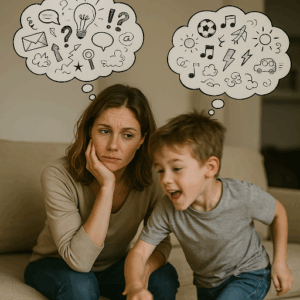
October is Attention Deficit Hyperactivity Disorder (ADHD) Awareness Month, and a good time to raise awareness of this increasingly common condition.
Did you know that ADHD affects:
- 1.8 million Canadians (1 out of 21 Canadians)
- Approximately 4% – 6% of Canadian adults
- Approximately 5% – 7% of Canadian children
- 65% of children diagnosed are likely to continue to experience symptoms as adults
Source: Centre for ADHD Awareness Canada
For those affected, ADHD can cause frustration, overwhelm, and an inability to focus, impacting how they live and function. This week’s blog explores ADHD signs and symptoms, how to seek a diagnosis, and resources for those affected, including caregivers.
ADHD 101
ADHD is a neurodevelopmental condition affecting how the brain manages attention, movement, and self-control. The term neurodevelopmental is used because it refers to disruptions in the brain’s development during childhood that can eventually lead to ADHD symptoms.
Part of the challenge with identifying and diagnosing ADHD are that signs and symptoms can vary significantly, go unnoticed, or change over time. Individuals with ADHD may also have other conditions, making it even harder to identify.
Types of ADHD
There are three main categories of ADHD:
- Inattentive Type ADHD – individuals have trouble focusing, listening, or following instructions. They often make careless mistakes, appear to daydream, or seem to “tune out.” They might forget things easily, lose items like homework or jackets, or avoid tasks that require sustained mental effort.
- Hyperactive-Impulsive Type ADHD – individuals often appear ‘on the go’. They may fidget, run, or climb when it’s not appropriate, have difficulty sitting still, talk excessively, or blurt out answers before questions are finished. Impulsivity can show as interrupting others or acting without thinking about consequences.
- Combined Type ADHD – this is the most common form, where symptoms of both inattention and hyperactivity-impulsivity are present.
Can ADHD signs and symptoms vary by age?
Yes. Not only can symptoms vary by age but also by severity. Even hormonal changes can trigger symptoms but more on that later.
ADHD symptoms usually appear in children before age 12. Patterns of behaviour are often observed in pre-school or early elementary school and are stronger, more frequent, or more disruptive than typical for kids the same age.
While the common signs may include frequent loss of interest in toys or activities, becoming easily distracted by stimuli or unrelated thoughts, or forgetful with daily activities, it is important to remember that these behaviours are normal in all children. Most parents can recall a time when their child was tired, excited, or overstimulated and displayed one of the behaviours above.
The difference with ADHD is how often and how strongly these behaviours occur, and whether they cause ongoing challenges at home, school, or in social situations.
The Centre for ADHD Awareness, Canada has compiled a list of age specific resources including diagnosis and assessment, treatment, and education.
Find them here:
- Infants and children (ages 0 – 6 years)
- Children and teenagers (ages 7 – 17 years)
- Young adults (ages 18 – 24 years)
- Adults (ages 25+ years)
Tip: For parents of teens, the BC Children’s Hospital has created a useful resource detailing self-care, organization strategies, and screen time.
Why diagnosing ADHD is important
ADHD is one of the most common disorders in young people. If the behaviours observed are disruptive or negatively impact a person’s relationships or daily functioning, consider talking to your family doctor, pediatrician, or a psychologist familiar with ADHD.
According to the Centre for Addiction and Mental Health (CAMH), untreated ADHD can increase the risk of future challenges such as anxiety, depression, and difficulties with relationships. Eventually, these challenges can have a negative effect on a person’s confidence and self-esteem. A diagnosis helps those with ADHD and their caregivers find strategies to manage symptoms, promote independence and confidence, and support success.
Gender differences related to ADHD
While boys are diagnosed with ADHD more often in childhood, research suggests there are a number of reasons that women tend to have later diagnoses.
Possible factors include:
- Girls are usually not as overtly physical so their symptoms are less apparent
- Hyperactivity in females may exist as thoughts rather than actions so are less visible
- Hormonal changes in perimenopause and menopause may trigger underlying symptoms, resulting in women seeking evaluation later in life
Tip: Learn more about women and ADHD and how a later diagnosis changed one mother’s experience in this Today’s Parent article.
Can children outgrow and ADHD diagnosis?
According to the Centre for Addiction and Mental Health (CAMH), ADHD involves a biological and developmental difference in brain function, affecting brain chemistry and structure, leading to challenges with attention and regulating emotion.
While ADHD symptoms may improve with maturity and management strategies, for 80% of children, their diagnoses continue through adolescence, with 65% experiencing symptoms into adulthood.
ADHD and perimenopause and menopause
Changing estrogen and progesterone levels during perimenopause and menopause can disrupt dopamine regulation and contribute to ADHD symptoms such as inattention, memory issues, emotional swings, and overwhelm. Natural hormonal changes can heighten challenges related to organization and focus, and for some women, it may prompt them to notice their own symptoms or seek an ADHD evaluation.
Tip: This article provides a deeper dive on how perimenopause and menopause can impact ADHD symptoms in women.
A final word
For ADHD Awareness Month, our goal was to overview ADHD and provide resources for more information. Chiropractic care can not treat or cure ADHD, however, patients find routine checkups helpful in supporting their family’s overall well-being. Our treatment plans identify, treat, and manage muscle and joint issues affecting posture, balance, and movement. Addressing patients’ physical concerns, allows them to focus on other priorities or conditions with less pain and restriction.
If you have questions related to this blog or any other health and wellness concern, contact us.
If there is a topic that you would like to see covered, let us know. We will do our best to provide answers or find resources that can.
Where we sourced this information
Information for this blog was sourced from ADDitude (ADHD Science and Strategies), Centre for ADHD Awareness, Canada, Centre for Addiction and Mental Health (CAMH), and Today’s Parent,